Michael Bell ¦ Design
Double Dihedral House ι La Cienega ι New Mexico 1992-93 ι Through these frames, the visual trajectory turns the space of the building inside out. . .
|
Michael Bell ¦ Design
Double Dihedral House ι La Cienega ι New Mexico 1992-93 ι Through these frames, the visual trajectory turns the space of the building inside out. . .
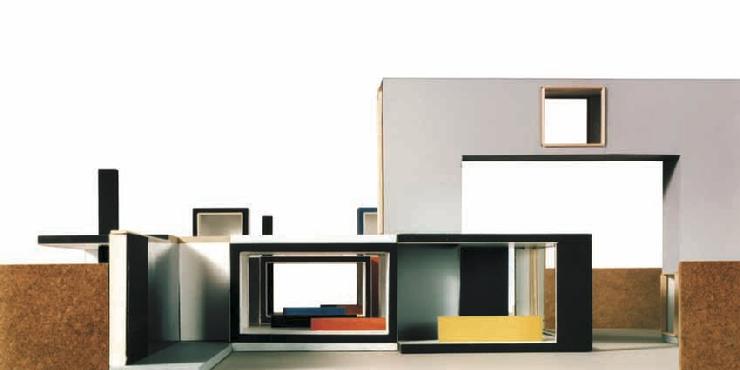
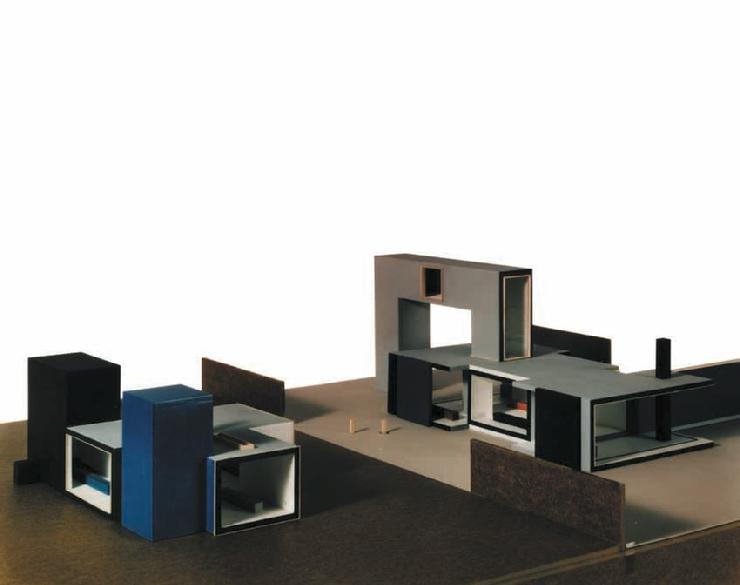
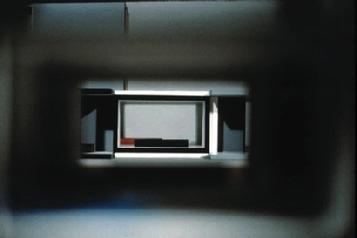
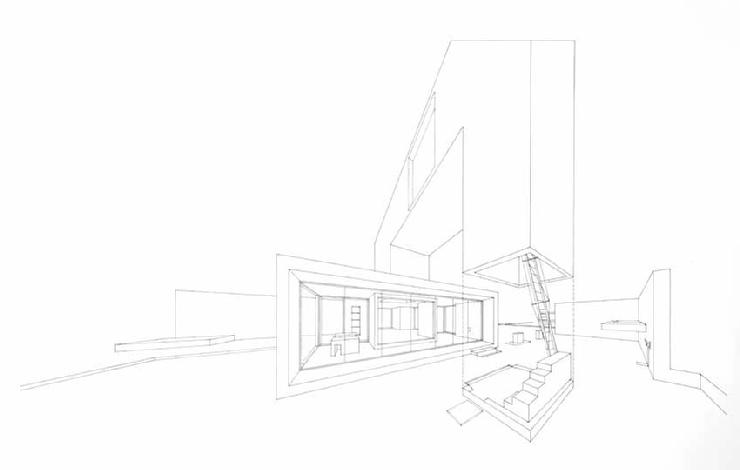
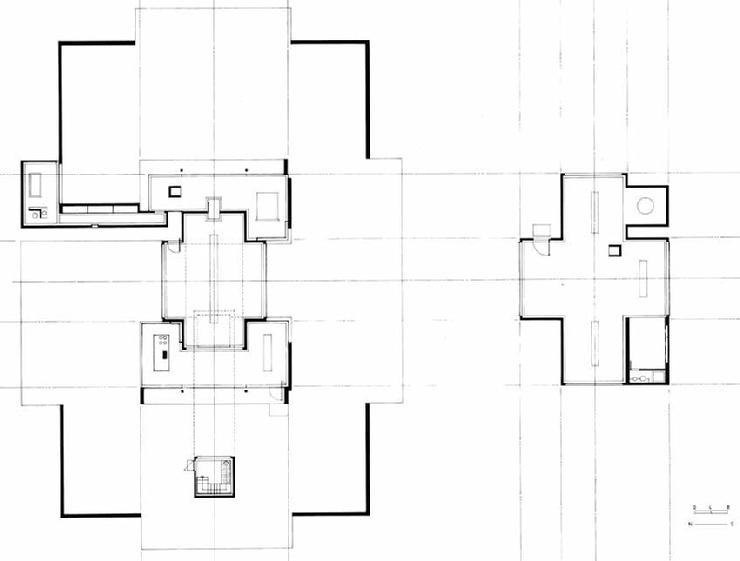
A house and a gallery for an art collector on four acres of desert near Santa Fe, the Double Dihedral House is simply constructed and composed of elemental planes and primary colors saturated and deepened with black. The program called for one bedroom, two galleries, a reading room, and a small library. The name of the project refers to the occupant as a standing subject; space is organized to reveal depth as well as flatness, and to allow one’s gaze to penetrate the entire spatial composition.
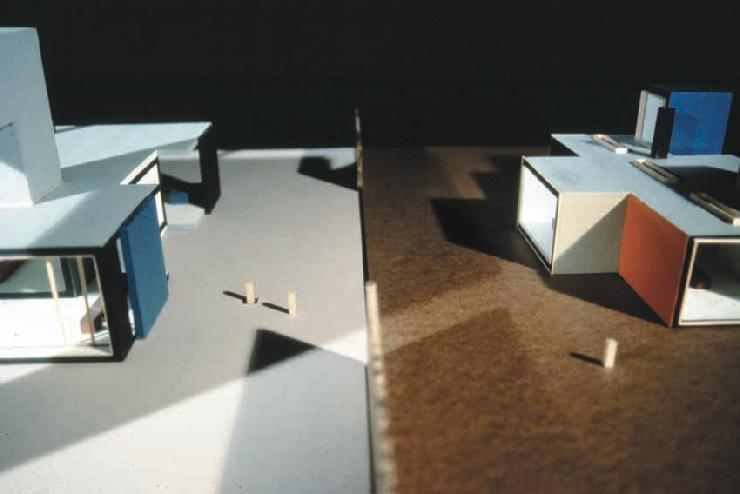
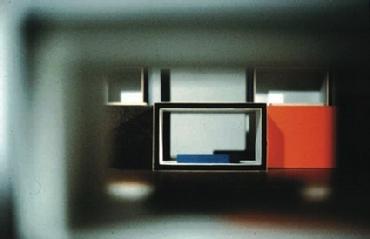
A cruciform volume is framed and unframed in the two structures, which are situated opposite one another; each is constituted in reference to its paired other. The frames are quite literal, both in plan and elevation. Upon arrival, the visitor faces four black-framed layers of glass. The trajectory of vision stops momentarily at the first frame, seeking the implied surface, before falling further through the syncopated layers of the other frames. Eventually, the gaze focuses not on the building or the frame but on the un-anchored space of the landscape beyond. Under such circumstances, the originative quality of perspectival space fails to provide the footing upon which to survey the Cartesian field.
The relationship of perceiving subject and perceived object is here turned inside out, the hegemony of perspective’s constructed subject and its fixed basin is overcome. Through these frames, the visual trajectory turns the space of the building inside out. The roof and floor are cut away to reveal the interior, which is rendered as an outside to its adjacent space.
|
|